Ongoing Feedback Can Drive Employee Retention and Performance
If you lead a team or run a small business, you likely know the feeling: the end of the year approaches, and suddenly you are staring down a mountain of performance appraisal forms. It is a stressful, time-consuming scramble where managers rush to summarize a year's worth of work, and employees brace themselves for backward-looking critiques.
The shared pain point of the traditional annual review isn't just that it's taxing, it's that its effectiveness is uncertain. One widely cited study from CEB (now part of Gartner) found that 95% of managers were dissatisfied with their performance management systems, and nearly 90% of HR leaders said reviews don’t yield accurate information.
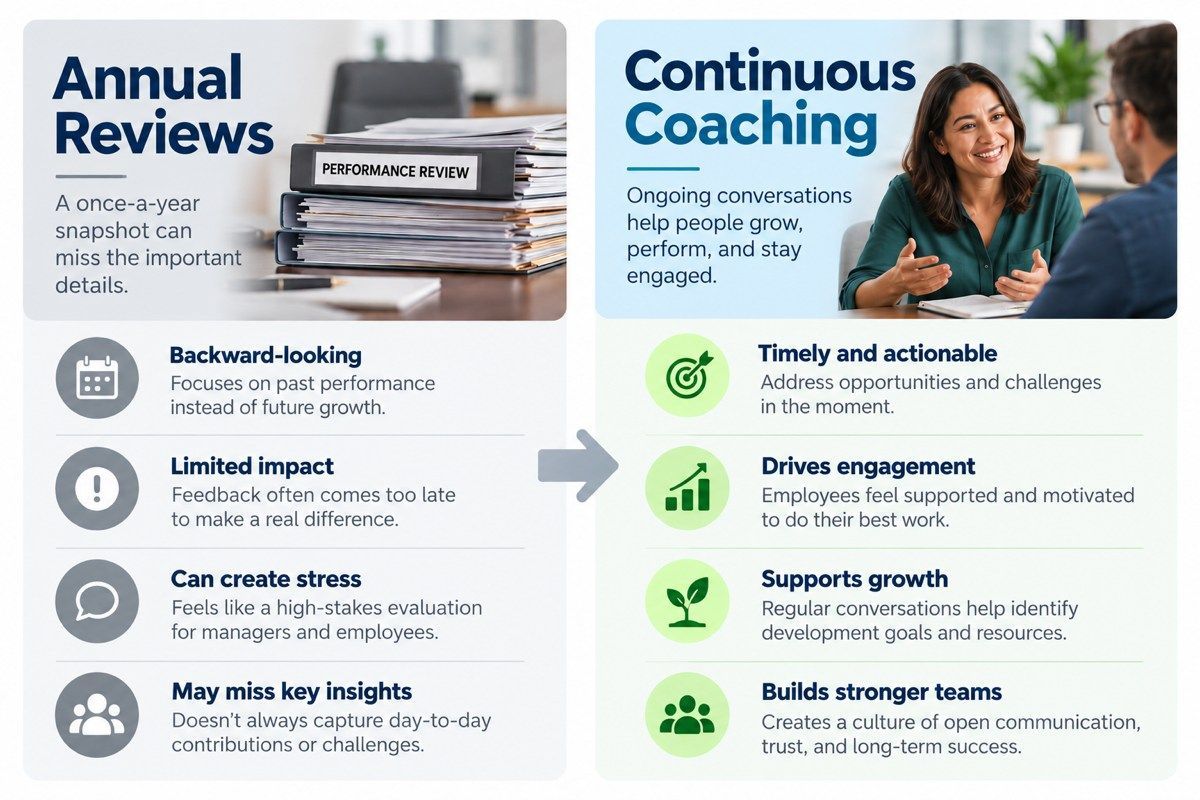
Performance shouldn't be audited once a year; it needs to be cultivated every week. By shifting your approach from administrative "evaluations" to active "coaching," you can help foster an environment of psychological safety, align daily expectations, and support your company's culture and retention rates.
Why Continuous Coaching Outperforms the Yearly Checkbox
Timeliness Over Hindsight
Addressing a missed deadline or a communication breakdown six months after it happened is too late to have a practical impact and could instead damage morale. In-the-moment coaching gives employees the immediate agency to adjust, learn, and succeed.
The Engagement Dividend
When employees feel seen and guided, they tend to perform better. According to Gallup, employees whose managers provide daily feedback are 3.6 times more likely to strongly agree they're motivated to do outstanding work than those who receive feedback only once a year. Gallup also found that 80% of employees who say they've received meaningful feedback in the past week are fully engaged.
Reframing the Manager's Role
Continuous coaching fundamentally shifts the dynamic between leadership and staff. Instead of acting as a "judge" who hands down a grade from on high, the manager becomes a "coach" who identifies obstacles, provides resources, and actively champions the employee's career trajectory.
The 3-Tier Continuous Coaching Rhythm
There are many options out there for HR software that can help small businesses manage continuous coaching. But even without a software budget, you can have the important conversations and use a simple way to track them. The review cadence described below can help keep teams connected:
1. The Weekly Pulse (15–20 Minutes)
This brief touchpoint is focused purely on immediate tasks and clearing roadblocks.
Goal: Keep momentum high and stress low.
Ask: "What is slowing you down the last couple of weeks, and how can I help remove hurdles?"
2. The Quarterly Growth Checkpoint (45 Minutes)
Once a quarter, step back from the daily task lists. This is the time to assess recent skill acquisition, check on progress toward personal development goals, and evaluate overall workload distribution to prevent burnout.
Goal: Ensure the employee is growing and feeling fulfilled in their role.
3. The Year-End Alignment (30 Minutes)
Because you have been coaching continuously, the year-end conversation should hold few surprises. Instead of an anxiety-inducing grading session, this meeting serves as a celebration of annual milestones, a forward-looking goal-setting session for the next year, and a natural time for compensation reviews.
The Manager's Toolkit: Coaching Questions That Spark Real Growth
To transition from evaluator to coach, try replacing generic 1-to-5 rating scales with open-ended conversation starters. Here are a few plug-and-play questions to bring to your next 1:1 check-in:
- "What project this past month gave you the most energy, and how can we lean into that?"
- "Where did you feel unsupported or blocked recently, and what resources do you need from me?"
- "What specific skill or certification would help you feel more confident in your role over the next six months?"
How Managerial Coaching Protects Your Benefits Investment
As a business leader, you know that attracting top talent requires competitive compensation and a robust benefits package. But
keeping that talent requires an environment where they can thrive.
Even the most generous health insurance, retirement plan, or wellness package is unlikely to offset possible burnout caused by poor workplace communication or unresolved issues. Research suggests career growth and day-to-day support play a major role in whether employees stay.
Continuous coaching creates the engagement that keeps great people invested and thriving. Furthermore, frequent, candid conversations make it easier for employees to use the benefits you already offer. A manager attuned to their team's well-being can proactively remind employees about Employee Assistance Programs (EAPs) or mental wellness benefits before acute stress turns into chronic absence or resignation.
Building a thriving company requires pairing a culture of supportive leadership with total rewards that protect your team's health and financial future. Attracting great employees starts with competitive perks, but it takes a supportive, coaching-led environment to keep them.
Looking to build a total rewards strategy that strengthens retention and complements your leadership culture? Reach out to our agency team today to discuss how we can help you design a group benefits package that protects your people.